Lately my reading pile has been less ‘light summer fluff’ and more ‘emotional heavyweights.’ I seem to have curated a list of books specifically designed to wring me out and leave me sobbing on the sofa.
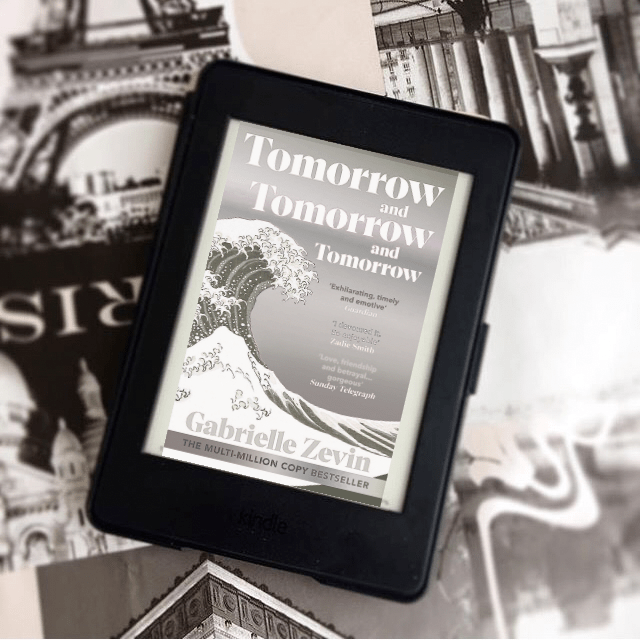
Some books feel less like stories and more like experiences — the kind that leave you staring into the void one chapter and laughing out loud the next. That’s exactly what Gabrielle Zevin’s Tomorrow, and Tomorrow, and Tomorrow did for me, a novel so rich I found myself reading slower just to make it last.
And so without further ado, let’s get into it.
Tomorrow and Tomorrow and Tomorrow | Gabrielle Zevin
Rating:
I had the extra joy of doing a buddy read on StoryGraph with my best friend, and sharing notes and reactions with her was such a highlight. It made the book feel even richer — every laugh, every heartbreak, every “YOU HAVE DIED OF DYSTENTERY” moment was doubled in joy.
Marginalia Musings:
“To play requires love and trust.”
➡ In the margin: Isn’t this also what relationships are? The ultimate co-op campaign.
Creativity and collaboration sit at the heart of the book — what it means to build something with another person, how art is never free from ego or compromise. It also dives into chronic pain, identity, grief, and the blurry edges between friendship and love. I found myself nodding at how Zevin captures the ache of wanting to be known fully by someone — and the impossibility of ever achieving it completely. What struck me most is how Zevin shows that the most sustaining relationships aren’t always romantic ones. Sometimes the person who knows you best — and wounds you deepest — is a friend. Doing the StoryGraph buddy read made me notice even more details and small joys in the writing — it was like playing co-op in real life.
One of the best parts of doing the buddy read was getting to share and compare reactions in real time. For example, I wrote:
“Why does Sadie always forgive Dov, who is an actual dickhead and knows it, but for Sam she always puts him on a pedestal and blames him when he falls. At least he actually has her best interests and heart. Dov is just a self-centred atrocious man child.”
This exchange made me laugh so hard and really highlighted how invested I was in the characters. I love that the book provoked these kinds of discussions — it shows how alive the story feels and how much fun it is to process it with someone else.
Two pages later, my friend replied:
“And two pages later Dov acknowledges that fact 🤣🤣”
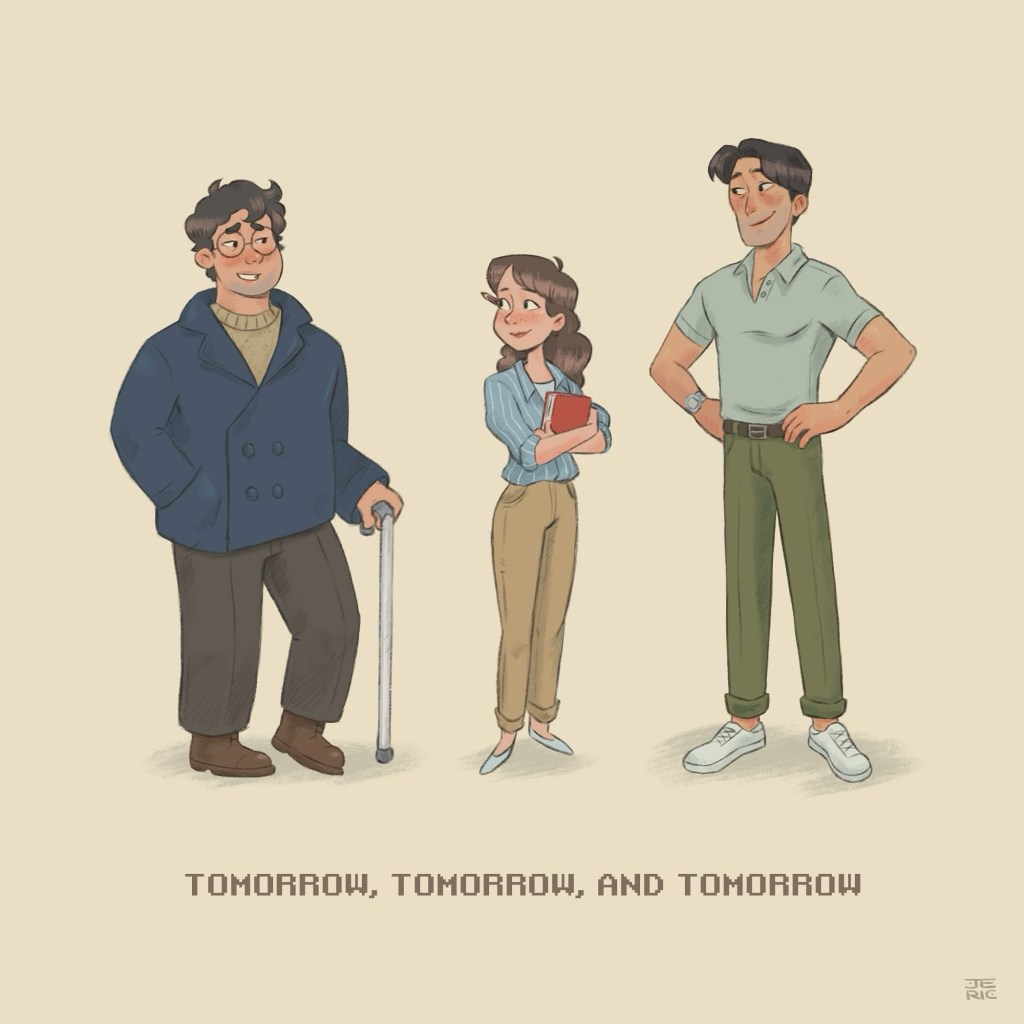
Zevin’s writing is deceptively simple — smooth, clear, but packed with meaning. I underlined constantly. She blends gamer references with literary weight so well that even non-gamers will get swept away. And the riskier structural choices (yes, even the POV shifts) paid off for me; they weren’t gimmicks, they were earned. Sam and Sadie are brilliant, frustrating, and fully human — the kind of characters you don’t always like but can’t stop caring about. Their silences and stubbornness made me want to knock their heads together, but that’s what made them feel real. Marx, though, was pure light. He grounded the chaos and honestly, I adored him.
“What is a game if not a world you can live in for a while?”
➡ In the margin: And what is a novel if not the same? Case in point: I didn’t want to log out.
Marginalia in action
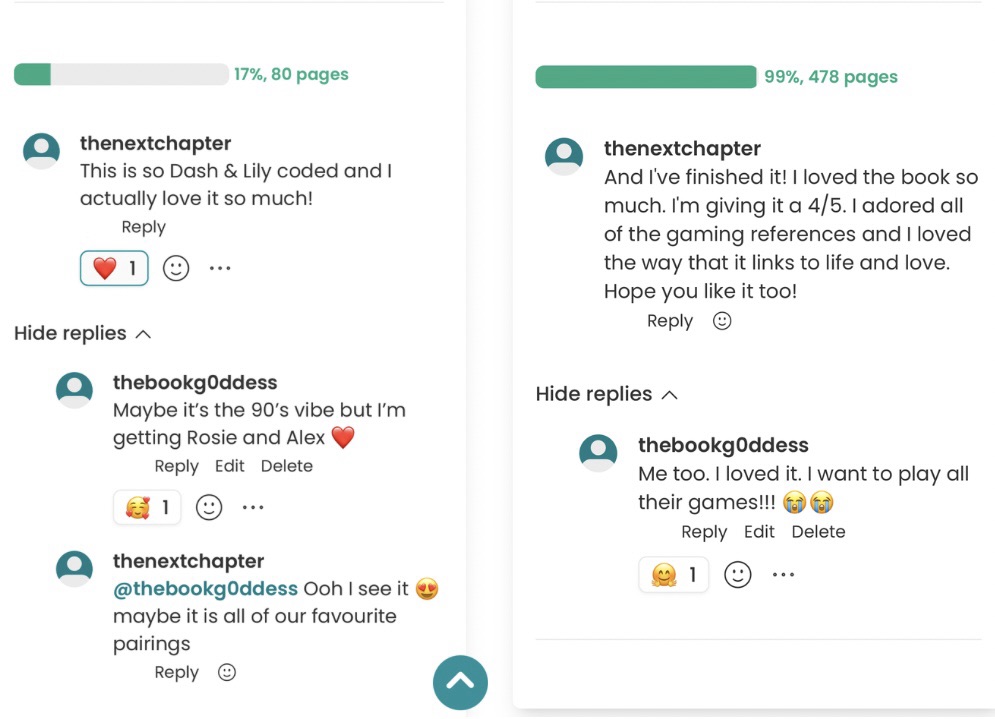
This book filled my notebook with annotations — some deep, some silly. There are “YES” scrawled in capitals, little crying doodles in the margins, and more than one note about how unfair it all felt. Sharing notes with my buddy on StoryGraph added another layer of fun — we kept comparing favorite quotes, laughing at the Oregon Trail jokes, and debating the characters’ decisions. That made the whole experience feel alive in a new way.
Final Verdict:
I adored Tomorrow, and Tomorrow, and Tomorrow. It’s one of those rare novels that made me want to slow down just to savor it. It made me laugh, it made me cry, and it reminded me how joyful and heartbreaking it is to build worlds with other people. Doing a buddy read with my best friend made it even richer. I’d recommend it wholeheartedly — especially if you’ve ever played Oregon Trail and want a new way to tell your friends “YOU HAVE DIED OF DYSENTERY.” To me, this felt like an instant modern classic.

 The Book Goddess Reads
Leave a comment