
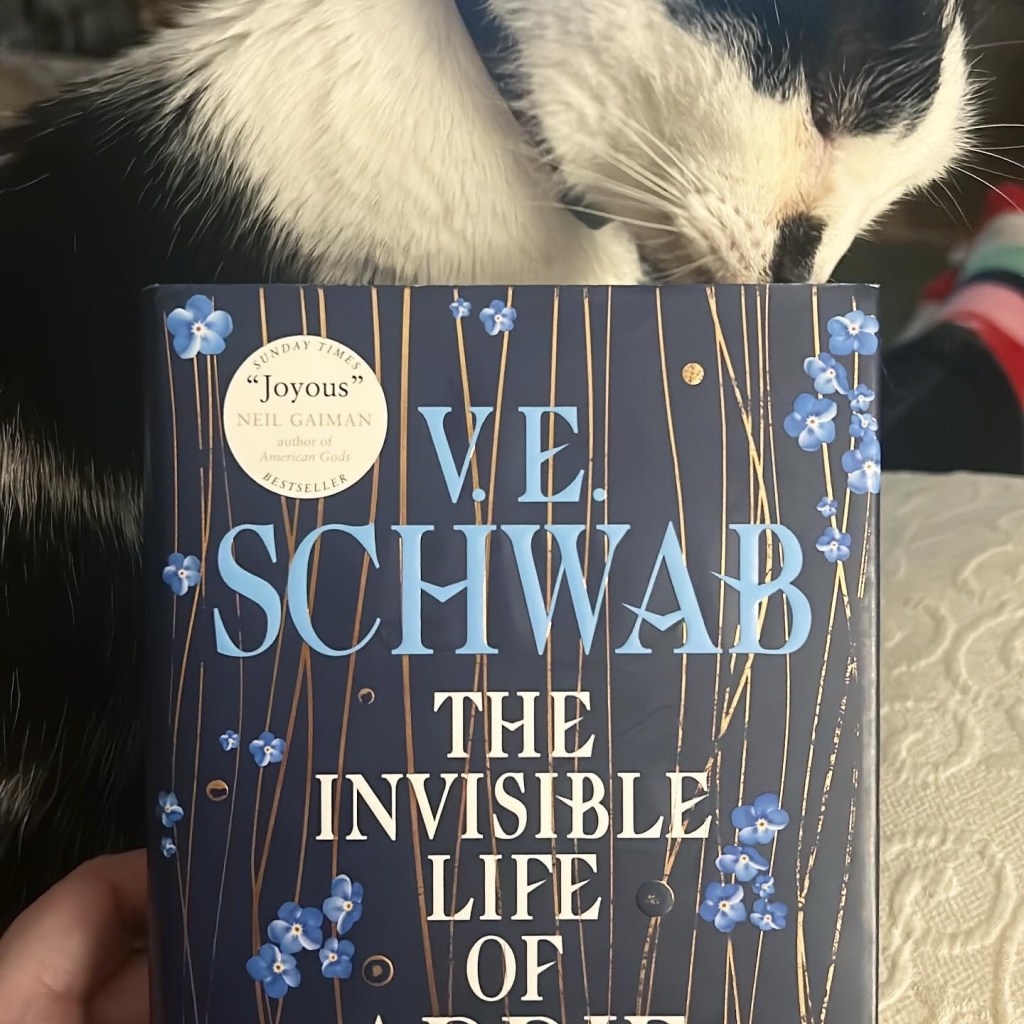
The Invisible Life of Addie Larue
Historical Fantasy | Literary Fiction | Magical Realism
Diving into Addie LaRue’s Invisible World
Her wish? To live freely. The price? To be forgotten by everyone she meets.
Imagine making a deal to escape a life you don’t want, a deal that grants you freedom but at a devastating cost: to be forgotten by everyone you ever meet. That’s the extraordinary and heartbreaking premise of “The Invisible Life of Addie LaRue.” A centuries-long journey of a woman who leaves no mark, immediately suggested a story of profound loneliness, the yearning for connection, and the enduring power of the human spirit against impossible odds.
And what a journey it was. Despite being instantly wiped from everyone’s memory, Addie somehow manages to leave these little echoes in the world and the people she meets, especially through the art she inspires. It’s this quiet rebellion against her curse that really hits you, beautifully highlighted by how art keeps circling back in her long life.
And so without further ado, lets get into the in depth review…
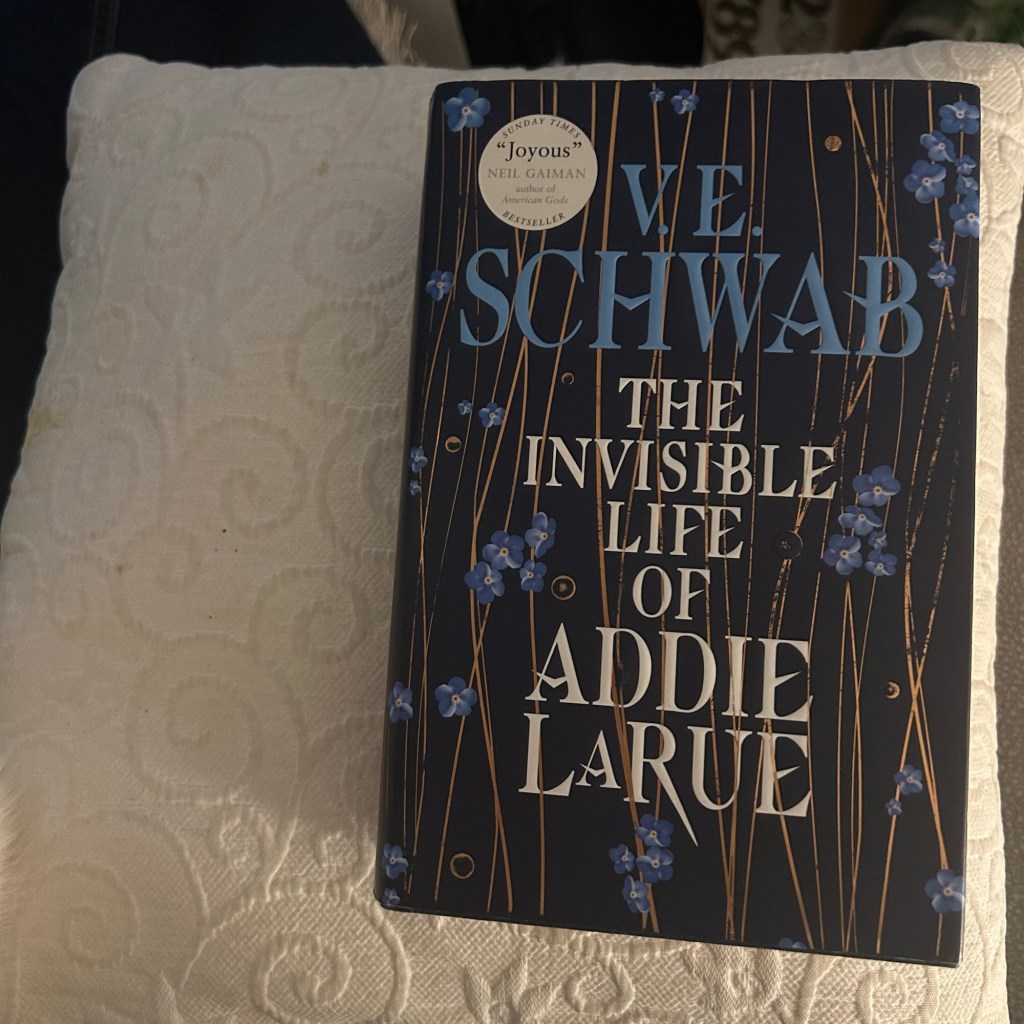
Rating:
My Feelings on this book:
☐ BEST BOOK I’VE EVER READ
☐ I DID NOT LIKE IT AT ALL
☐ READ BETTER ONES
☑ THIS BOOK MADE ME CRY
☑ MUST READ
☐ I COULD NOT FINISH
☐ WISH I HADN’T READ THIS
Marginalia Musings
So, the core of this story is about a deal with the devil (sort of!) for freedom, but the catch is… nobody remembers you. In 18th-century France, a young woman named Addie LaRue faces a future she dreads. In a moment of desperation, she makes a pact with a shadowy, old god to escape it all. Freedom is hers, but the price is steep: the moment she’s out of someone’s sight, poof! Gone from their memory. The book then takes us on Addie’s incredible, often solitary journey across centuries. She witnesses history unfold, experiences so much, yet leaves no real trace on the individuals she meets.
Despite her invisibility in the minds of others, Addie finds ways to subtly influence the world around her, particularly through art. Her existence takes a dramatic turn centuries later when she meets a man in a New York City bookstore who, inexplicably, remembers her face. This encounter forces Addie to confront her past and the potential for a future she had long thought impossible.
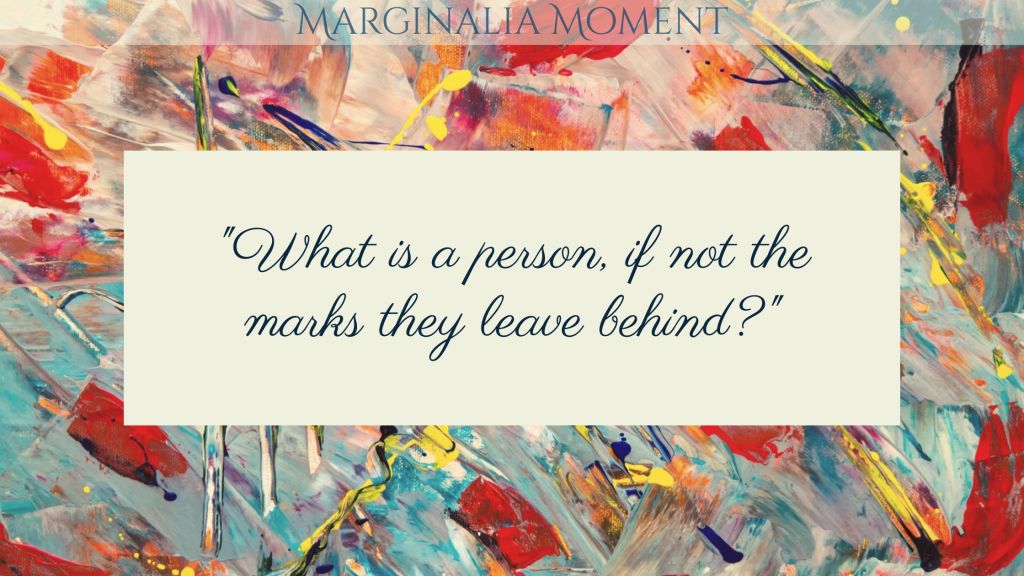
This feels like the central question of the entire book. Addie’s very existence defies this statement, making her journey all the more poignant.
The book is just brimming with these weighty ideas. The most obvious one is that deep human yearning to be remembered, to leave some kind of footprint. Addie’s centuries of instant forgettability really shine a light on how much we value connection and our legacy, big or small. It also messes with your head about time and existence. Living for centuries gives Addie this crazy long view of history, showing how things cycle and repeat.
Then there’s this push and pull between freedom and belonging. Addie initially craves escape from what’s expected of her, but her curse throws her into this intense isolation. It makes you wonder what “freedom” even means if you can’t share it with anyone. And I loved how the book hinted at art and storytelling being these sneaky ways to leave a mark, even when you’re physically forgotten.
Luc, the dark god, totally intrigued me. He’s not your typical villain. His interactions with Addie are this weird, complex dance. It’s like he’s bound by their deal but also has this strange fascination with her. It makes you question his motives and the whole nature of their connection.
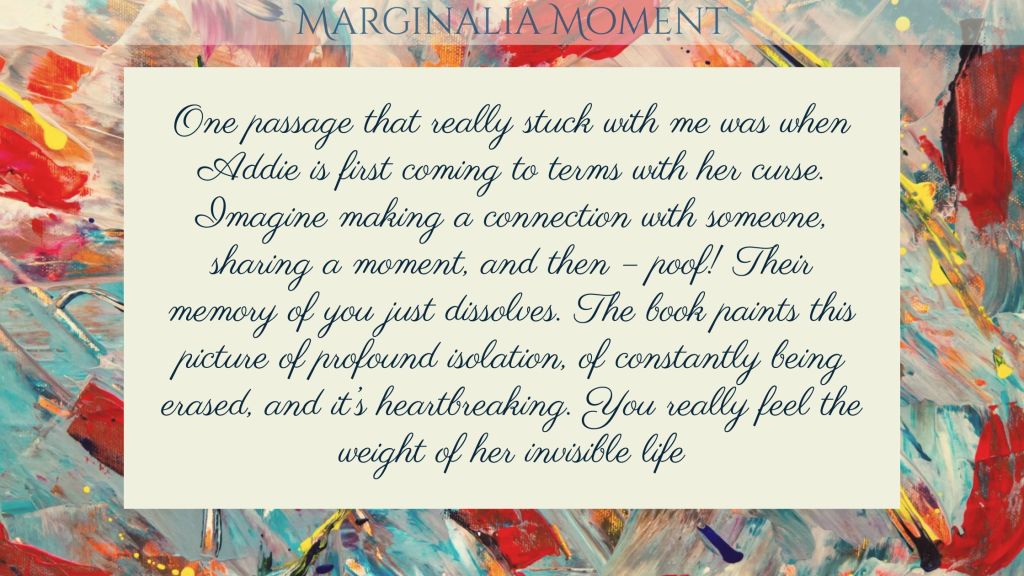
You see Addie desperately trying to leave a mark – carving her name, whispering to the wind – and it just screams that basic human need to matter, to not just disappear, even when some crazy supernatural thing is working against her.
V.E. Schwab’s writing just pulls you in. It’s so evocative, almost poetic at times, painting these incredible pictures of the past and really getting inside Addie’s head. The way the story jumps between past and present feels so natural, slowly revealing all the layers of her long, strange life. She’s so good at using sensory details, you really feel like you’re there with Addie, whether she’d wandering through old Paris or trying to find a quiet corner in some forgotten city. Even though she lives for centuries, the pacing lets you really feel the weight of her loneliness and those rare moments of connection. And getting into her inner thoughts makes her, someone you can actually connect with.
Our Cast of Characters
Addie
Our main girl, Addie Larue, is just captivating. Her ability to bounce back from all that lonliness is seriously impressive. You understand why she wanted freedom in the first place, but watching her navigate centuries of being forgotten just makes you feel for her so much. Even with the magic involved, her basic human desire to connect and be remembered feels so real. I did get a little frustrated with her at times, like why didn’t she try this or that? But then you remember the limitations of her curse and it kinda makes sense. She’s probably also so damn tired, she can’t think any more anyway. Or maybe she’s already tried my idea, and it didn’t work so she didn’t bother to tell us.
Luc?
Luc (the dark god) is fascinatingly shady (no literally, he’s made of shadows). He’s not some mustache twirling bad guy. He feels more like a force of nature, stuck to the rules of their deal. The way he interacts with Addie is so layered, almost like there’s this weird respect, or twisted kind of affection there. (Not going to lie, me in my Romantasy era, would definitely go off with him for a while). He’s this constant reminder of the price she paid.
Henry
Henry Strauss is such a pivotal character. He’s like this little spark of hope in Addie’s long, lonely existence. The fact he remembers her throws everything into question. And the fact he’s got his own struggles with feeling “ordinary” creates this cool parallel with Addie wanting to be seen. Their connection, even when it’s messy feels really genuine.
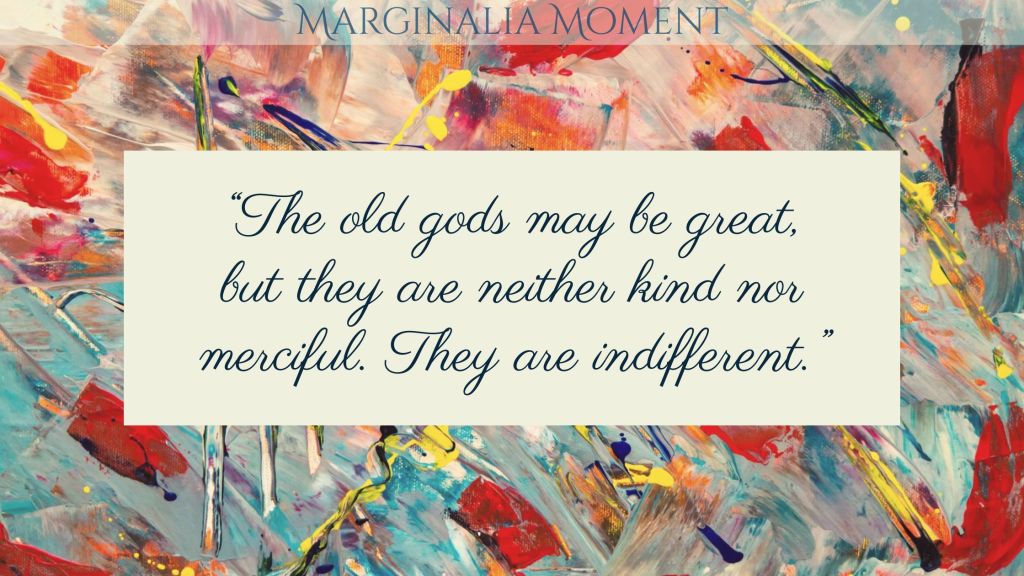
This sets the tone for the nature of the bargain Addie makes. It’s not a benevolent wish-granting, but a transaction with a powerful, amoral entity.
Marginalia in action
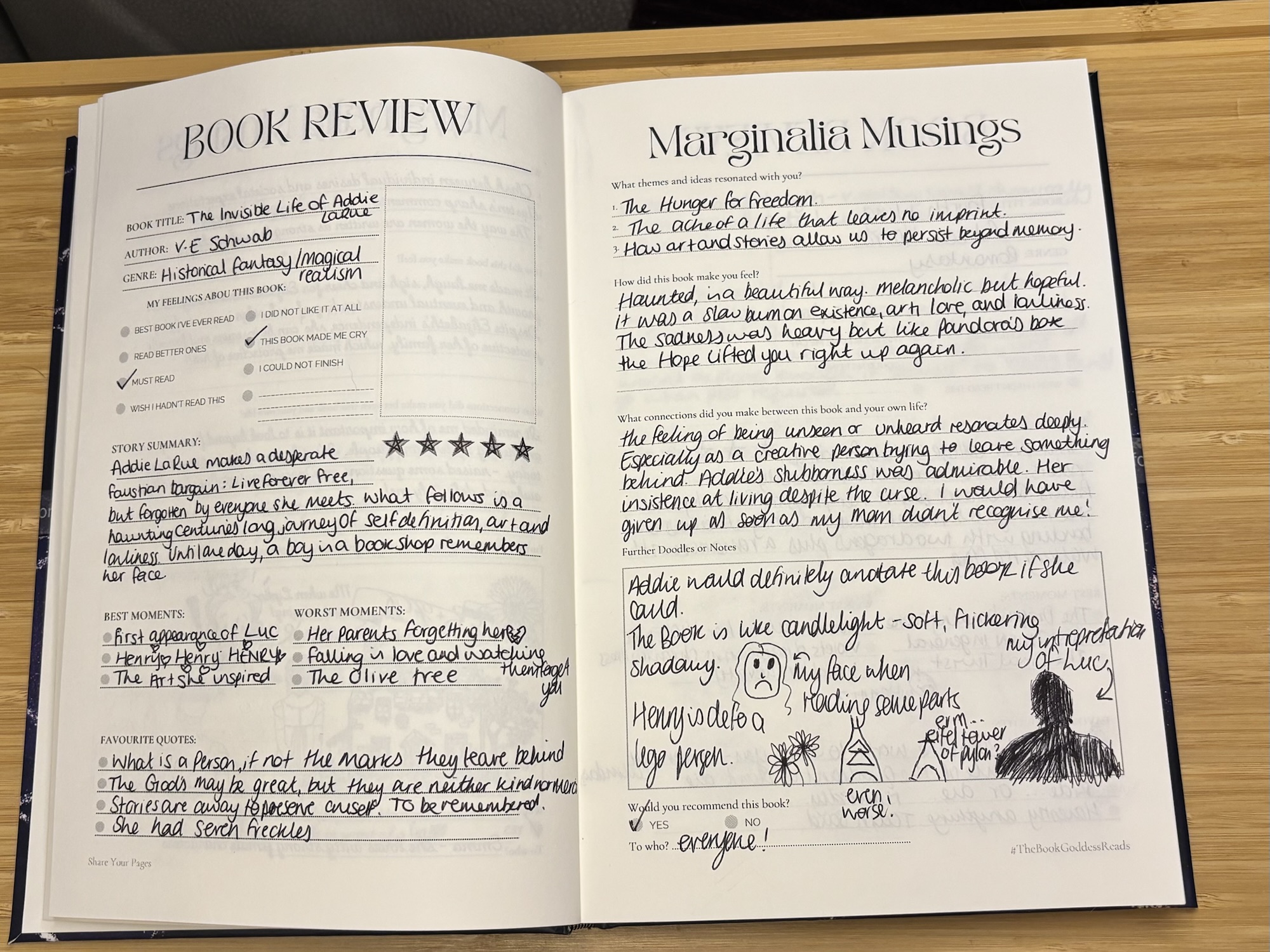
I borrowed The Invisible Life of Addie LaRue from a friend, which meant I couldn’t underline or scribble in the margins (a small tragedy for someone who reads with a pen in hand). But honestly? It turned out to be the perfect book to read alongside my Marginalia Journal.
The story is quiet, atmospheric, and deeply internal — full of passing thoughts and lingering feelings. Instead of marking the book itself, I started jotting down quotes that made me pause, sketching tiny stars and candles in the margins, and writing little letters to Addie when her loneliness felt like it might swallow her whole. It became part diary, part reading companion.
There’s something fitting about this book being remembered in fragments — Addie’s life, after all, is told in snapshots and echoes. Writing in the journal helped me hold on to those fleeting moments.
If you’re a reader who borrows books, loves annotating but can’t always write in the pages, or just wants a more intentional way to connect with what you’re reading — a Marginalia Journal is magic. I use the one I designed for fellow readers who want to leave a trace.
You can find it here in my shop as part of the Marginalia Box or on its own. It’s full of space for quotes, reactions, page numbers, doodles, and personal notes — the kind of bookish breadcrumb trail I wish Addie could’ve left behind.
Final Verdict:
“The Invisible Life of Addie LaRue” isn’t just a book; it’s an experience. It’s beautifully written, deeply moving and honestly, it sticks with you. It makes you think about memory, connection and the fundamental human need to be seen. Yeah the pacing could be slow at times, but it really emphasises the vastness of Addie’s lonely life. I would absolutely recommend this to anyone who loves character-driven stories, big, thought provoking themes, and a touch of magic that feels real. It’s a unique and unforgettable journey that I’m still thinking about.

 The Book Goddess Reads
Leave a comment